L’ONF s’engage à respecter votre vie privée

Nous utilisons des témoins de navigation afin d’assurer le bon fonctionnement du site, ainsi qu’à des fins publicitaires.

Si vous ne souhaitez pas que vos informations soient utilisées de cette manière, vous pouvez modifier les paramètres de votre navigateur avant de poursuivre votre visite.

En savoir plus
PASSER Accessibilité

Tulku

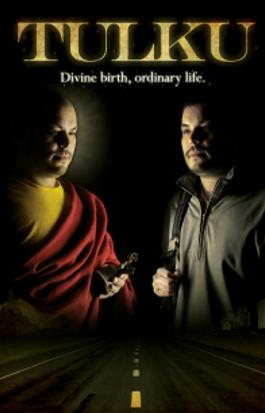
Gesar Mukpo was three when he became one of the first people born in the West to be recognized as a tulku the present-day reincarnation of a Buddhist master. For his entire life, he's been trying to figure out what that really means. Starting in the mid-1970s, Tibetan teachers including Gesar's father, Chögyam Trungpa Rinpoche; began recognizing Western children as tulkus. Suddenly, a system that had ensured stable spiritual power and authority in Tibetan society for 800 years was transplanted into a completely different culture. In this intensely personal documentary, Gesar sets out to meet other tulkus to find out …

Votre location se termine le
None
Vous avez déjà acheté ce film.
Téléchargez-le à partir de Mes achats.

Détails

Gesar Mukpo was three when he became one of the first people born in the West to be recognized as a tulku the present-day reincarnation of a Buddhist master. For his entire life, he's been trying to figure out what that really means.

Starting in the mid-1970s, Tibetan teachers including Gesar's father, Chögyam Trungpa Rinpoche; began recognizing Western children as tulkus. Suddenly, a system that had ensured stable spiritual power and authority in Tibetan society for 800 years was transplanted into a completely different culture.

In this intensely personal documentary, Gesar sets out to meet other tulkus to find out how they reconcile modern and ancient, East and West. Journeying through Canada, the United States, India and Nepal, he encounters four other tulkus who struggle with the meaning of this profound dilemma.

What does it mean to carry on this ancient tradition designed for an old world when you're living in a completely new one? How will Gesar and other Western tulkus fulfill their destiny?

Tulku was produced as part of the Reel Diversity Competition for emerging filmmakers of colour. Reel Diversity is a National Film Board of Canada initiative in partnership with CBC Newsworld.

  • écriture
    Gesar Mukpo
  • réalisateur
    Gesar Mukpo
  • participation
    Gesar Mukpo
    Dylan Henderson
    Ashoka Mukpo
    Dzongsar Khyentse Rinpoche
    Wyatt Arnold
    Ogyen Trinley, His Holiness Dorje
    Reuben Adrian Derksen
  • producteur
    Kent Martin
  • monteur
    Rohan Fernando
    Ethan Neville
  • cinématographie
    Pablo Bryant
    Ethan Neville
  • preneur de son
    James Hoagland
    Pablo Bryant
  • caméra sous-marine
    Robert Guertin
  • photographie additionnelle
    Gesar Mukpo
  • assistant de production
    Breton Hoagland
  • traduction
    Jessie Litven
  • superviseur de production
    Patsy Coughran
  • montage son
    Alex Salter
  • recherche de documents d'archives
    Gesar Mukpo
  • monteur en ligne
    Steve Cook
  • enregistrement de la narration
    Jamie Alexander Alcorn
  • ré-enregistrement
    Allan Scarth
  • coordonnateur de production
    Stephanie Coolen
    Vanessa Larsen
  • agent, marketing
    Candice Desormeaux
  • administrateur de centre
    John William Lutz
  • producteur exécutif
    Kent Martin
Tulku
Options d'achat
Détails sur les licences
Déjà payé pour voir ce film?
Détails sur les licences
Détails sur les licences de téléchargement
Usage personnel et en classe

À qui s’adresse cette licence :

Aux particuliers pour le visionnement personnel, ainsi qu’aux parents et aux enseignants qui souhaitent présenter un film à une seule classe au Canada.

Ce que cette licence permet :

  • Visionnement privé et personnel, au Canada et à l’international.
  • Présentation du film à une seule classe au Canada.
  • Téléchargement et visionnement hors ligne.

Ce que cette licence ne permet pas :

  • Projections ou événements destinés à plusieurs classes ou à l’ensemble d’un campus.
  • Projections ou événements communautaires, publics ou institutionnels.

Les suppléments ne sont pas inclus avec le film téléchargé.

Usage institutionnel

À qui s’adresse cette licence :

Aux organisations, aux ministères et organismes gouvernementaux, aux entreprises et aux organismes sans but lucratif qui souhaitent télécharger le film et en conserver une copie.

Cette licence de téléchargement (DTO) n’est pas offerte aux commissions scolaires ni aux établissements postsecondaires. Si vous représentez l’un de ces établissements, communiquez avec nous à info@onf.ca pour connaître les options de licence qui s’offrent à vous.

Ce que cette licence permet :

  • Projections internes destinées aux employés, aux membres, aux élèves, aux étudiants ou aux usagers.
  • Projections ouvertes au public dans les locaux de l’organisation, sans frais d’admission et en dehors du circuit des cinémas commerciaux.
Vous souhaitez plutôt organiser une projection publique ponctuelle ?

À qui s’adresse cette option :

Aux bibliothèques publiques, aux groupes communautaires, aux ONG et aux autres organisations qui souhaitent organiser une projection publique ponctuelle au Canada, sans frais d’admission.

Comment demander une projection :

Remplissez le formulaire « Demande de projection d’un film de l’ONF ».

Pour toute question, écrivez à projectionscommunautaires@onf.ca.

Restrictions relatives à la diffusion en continu

Les films achetés par téléchargement (DTO) ne peuvent pas être hébergés sur un serveur de diffusion en continu sans autorisation préalable.

Pour demander l’autorisation d’ajouter ces films à un serveur institutionnel ou éducatif, communiquez avec nous à info@onf.ca.